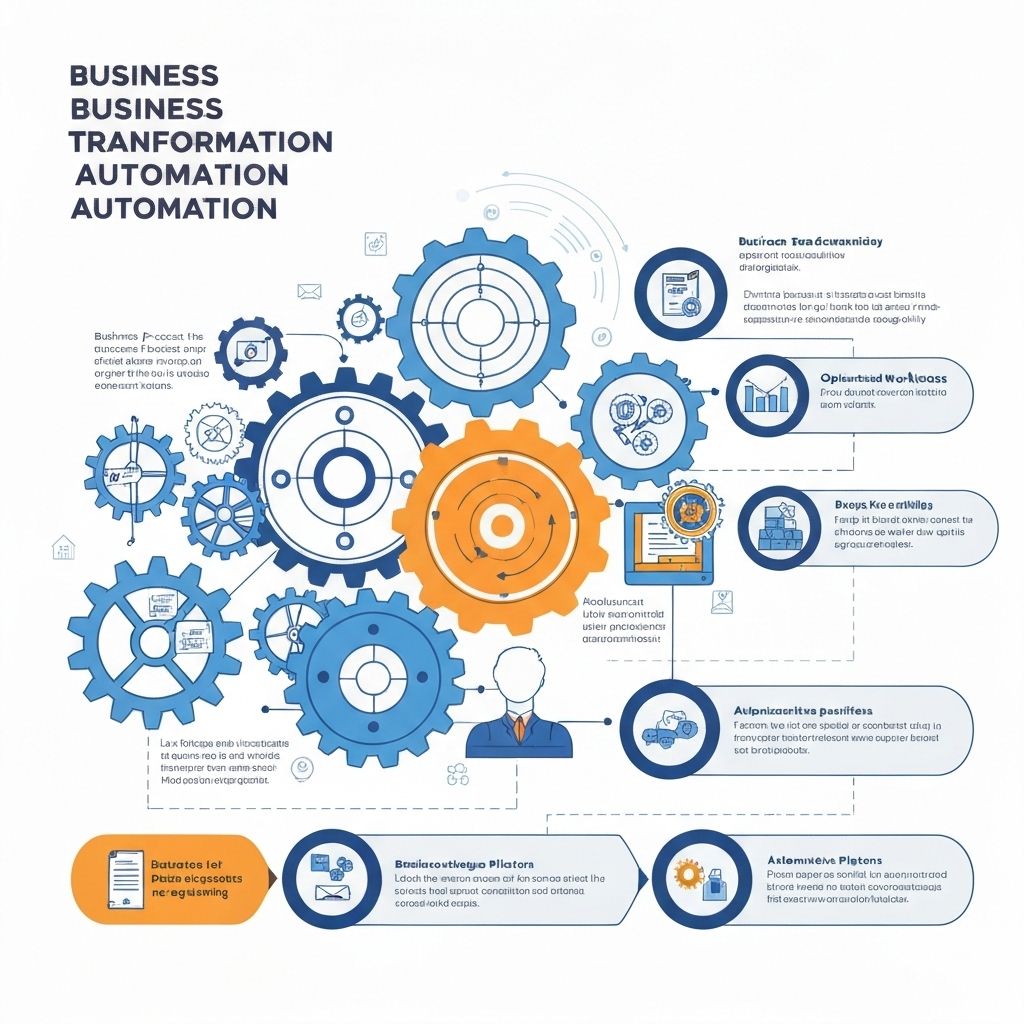
In today's fast-paced business environment, automation is no longer optional—it's essential for survival and growth. But successful automation requires more than just implementing technology; it demands a strategic approach that aligns with business objectives and delivers measurable value.
The Business Case for Automation
Why Automation Matters Now
The business landscape has fundamentally changed:
**Customer Expectations**: Demand for faster service and 24/7 availability**Competitive Pressure**: Need to do more with less**Talent Shortage**: Difficulty finding and retaining skilled workers**Digital Transformation**: Imperative to modernize operations**Cost Pressures**: Requirement to reduce operational expensesAutomation addresses all these challenges while creating new opportunities for growth and innovation.
Strategic Benefits of Automation
1. Operational Efficiency
**Faster Processing**: Complete tasks in minutes instead of hours**24/7 Operations**: Work continues around the clock**Scalability**: Handle volume spikes without adding staff**Consistency**: Eliminate process variations2. Cost Reduction
**Labor Savings**: Reduce manual effort by 40-70%**Error Reduction**: Eliminate costly mistakes and rework**Improved Resource Utilization**: Redeploy staff to high-value work**Lower Infrastructure Costs**: Reduce system overhead3. Enhanced Quality
**Accuracy**: Achieve 99%+ accuracy rates**Compliance**: Ensure consistent adherence to regulations**Audit Trails**: Maintain complete process documentation**Standardization**: Eliminate process variations4. Better Customer Experience
**Faster Response Times**: Reduce wait times and delays**Improved Accuracy**: Eliminate errors in customer interactions**Personalization**: Deliver tailored experiences at scale**Omnichannel Consistency**: Provide seamless experiences across channels5. Employee Satisfaction
**Eliminate Tedious Work**: Free staff from repetitive tasks**Enable Strategic Focus**: Allow employees to work on meaningful projects**Reduce Burnout**: Decrease stress from mundane activities**Career Development**: Create opportunities for upskillingBuilding a Successful Automation Program
Phase 1: Assessment and Strategy
Identify Automation Opportunities
Map current processes and pain pointsAssess automation potential and ROIPrioritize based on value and feasibilityDefine success metricsDevelop Automation Strategy
Align with business objectivesSet realistic goals and timelinesSecure executive sponsorshipAllocate budget and resourcesPhase 2: Proof of Concept
Start Small, Think Big
Select a high-value, low-risk pilot processBuild and test the automationMeasure results against baselineDemonstrate ROI to stakeholdersKey Success Factors
Choose processes with clear rules and high volumeEnsure data quality and system stabilityInvolve process owners and end usersPlan for change managementPhase 3: Scaling and Expansion
Expand Strategically
Build on pilot successAutomate related processesExpand across departmentsDevelop reusable componentsEstablish Governance
Create Center of Excellence (CoE)Define standards and best practicesImplement change management processesProvide training and supportPhase 4: Optimization and Innovation
Continuous Improvement
Monitor performance metricsIdentify optimization opportunitiesIncorporate user feedbackUpdate automations as processes evolveEmbrace Innovation
Integrate AI and machine learningExplore intelligent document processingImplement process miningLeverage advanced analyticsAutomation Maturity Model
Level 1: Ad Hoc
Individual automationsNo formal governanceLimited reuseTactical focusLevel 2: Opportunistic
Multiple automationsBasic governanceSome standardizationDepartment-level impactLevel 3: Systematic
Automation program establishedFormal governance and CoEStandardized developmentEnterprise-wide deploymentLevel 4: Strategic
Automation as core capabilityIntegrated with business strategyAdvanced AI and analyticsContinuous innovationLevel 5: Transformative
Automation-first cultureIntelligent automation ecosystemPredictive and autonomous processesCompetitive differentiationCommon Automation Pitfalls to Avoid
1. Automating Bad Processes
Fix and optimize processes before automating them. Automation amplifies both efficiency and inefficiency.
2. Lack of Executive Support
Secure leadership buy-in and sponsorship. Automation requires organizational commitment.
3. Insufficient Change Management
Prepare employees for change. Address concerns and provide training.
4. Unrealistic Expectations
Set achievable goals and timelines. Automation is a journey, not a destination.
5. Poor Governance
Establish standards and oversight. Prevent automation sprawl and technical debt.
6. Neglecting Maintenance
Plan for ongoing support and updates. Automations require care and feeding.
Measuring Automation Success
Financial Metrics
Cost savings and avoidanceROI and payback periodProductivity improvementsRevenue impactOperational Metrics
Processing time reductionError rate improvementVolume handledSLA complianceStrategic Metrics
Employee satisfactionCustomer satisfactionTime to marketInnovation capacityIndustry-Specific Automation Opportunities
Financial Services
Loan processing and underwritingFraud detection and preventionRegulatory reportingCustomer onboardingHealthcare
Claims processingPatient schedulingMedical records managementBilling and collectionsManufacturing
Supply chain managementQuality controlInventory managementProduction schedulingRetail
Order processingInventory managementCustomer servicePrice optimizationTelecommunications
Service provisioningBilling and invoicingNetwork monitoringCustomer supportThe Future of Business Automation
Emerging Trends
Hyperautomation
Combining RPA, AI, machine learning, and process mining to automate end-to-end processes.
Intelligent Document Processing
Using AI to extract and process information from unstructured documents.
Process Mining
Discovering and analyzing processes automatically to identify automation opportunities.
Low-Code/No-Code Platforms
Enabling business users to build automations without programming skills.
Autonomous Processes
Self-learning systems that adapt and optimize without human intervention.
Getting Started: Your Automation Roadmap
Month 1-2: Discovery
Assess current stateIdentify opportunitiesBuild business caseSecure approvalMonth 3-4: Pilot
Select pilot processBuild automationTest and validateMeasure resultsMonth 5-6: Expansion
Scale successful pilotsAutomate additional processesEstablish governanceTrain team membersMonth 7-12: Optimization
Monitor and improveExpand across organizationIntegrate advanced capabilitiesBuild automation cultureConclusion
Automation is not just about technology—it's about transforming how your business operates. By taking a strategic approach, starting with high-value opportunities, and building a culture of continuous improvement, you can achieve remarkable results.
The question is no longer whether to automate, but how quickly you can transform your organization to remain competitive in an increasingly automated world.
Ready to start your automation transformation? RPAverse can help you assess opportunities, build a strategic roadmap, and implement automation that delivers real business value.
Contact us today for a free automation assessment and discover how we can help you achieve your business goals through intelligent automation.